
TLDR
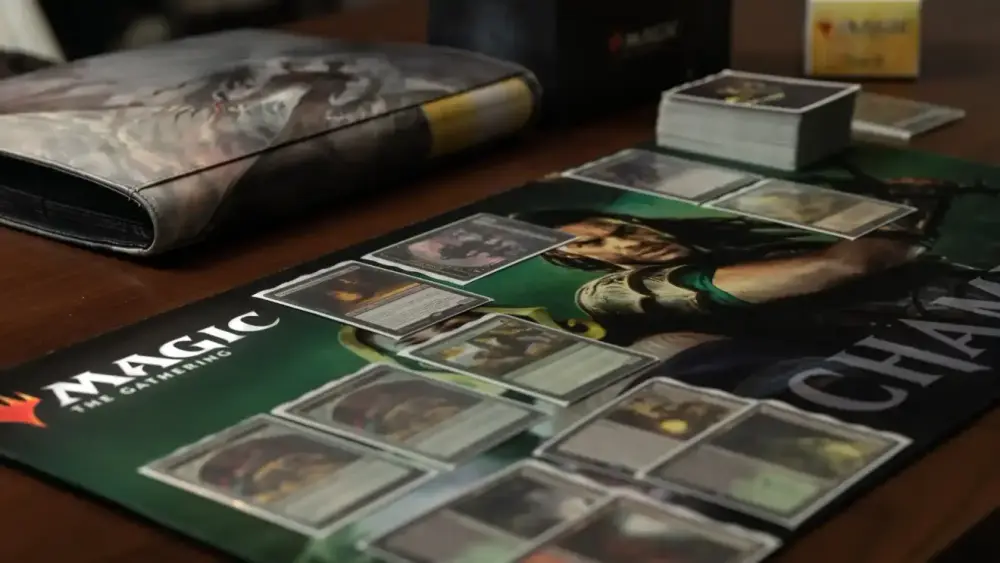
For personal use, MTG proxies are “fine” in the way most players mean it: casual play, playtesting, your friend group, your Cube, your Commander nights.
The rules are simple: don’t try to pass them off as real.
Wizards has explicitly said they don’t want to police personal, non-commercial playtest cards—but they do care about sanctioned events.
Sanctioned tournaments are different: you generally can’t use your own proxies there, and “judge proxies” are a specific thing.
If you’re here because you asked, “Are MTG proxies legal to own or print?” what you’re usually really asking is:
Am I going to get in trouble if I print some cards for my Commander deck, as long as I’m not being sketchy about it?
And the plain-English reality is: for personal, non-commercial use, you’re fine—so long as you don’t cross the line into deception.
That’s it. That’s the article.
(Okay, fine, here’s the rest—because there are always edge cases.)
The line you cannot cross: deception
Most proxy confusion disappears when you stop arguing about the word “proxy” and focus on intent.
Don’t deceive anyone
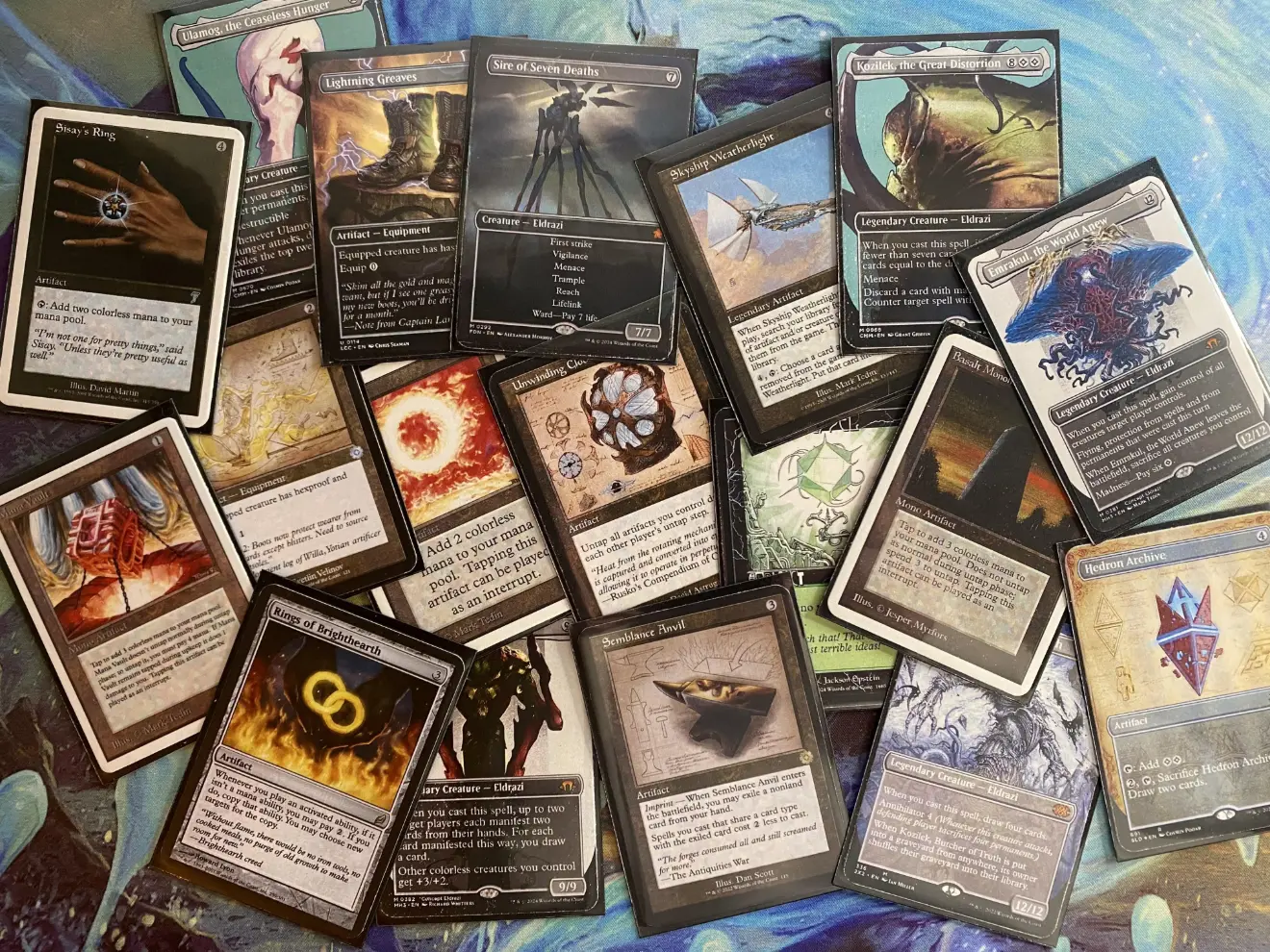
A proxy is a stand-in for gameplay. A counterfeit is a fake meant to be mistaken for the real thing (or sold like it’s real).
So if you want to stay proxy-clean:
Be transparent (your pod should know what’s up).
Make it obvious they aren’t authentic cards.
Don’t use official-looking backs in a way that invites confusion, especially outside sleeves.
If the goal is “nobody can tell,” that’s not “proxy etiquette.” That’s a different hobby. And it’s the expensive kind.
What Wizards actually says (and what it means in practice)
Wizards has directly addressed the “playtest card” scenario: a basic land with a card name written on it, used outside sanctioned play. Their stance is basically: we’re not trying to police that.
That matters because it reflects how Wizards thinks about the community norm:
Playtest cards for personal, non-commercial use aren’t their priority.
Sanctioned events still require real cards.
The proxies announcement is about enforcement priorities and community reality: they aren’t interested in hunting down personal, non-commercial playtest cards, but they are interested in stopping counterfeiting and maintaining rules for sanctioned play.
So, the real-world takeaway stays the same:
personal, non-commercial proxies are fine—don’t deceive.
“Legal” vs “allowed”: three different questions people mix together
When someone says “legal,” they usually mean one of these:
1) Is it legal under the law?
Printing exact art/layout/logos can implicate copyright and trademark rules. “Fair use” is real, but it’s fact-specific and not a cheat code you unlock by saying “Commander night.”
Practically, the risk is extremely low for personal use.
2) Is it allowed by Wizards policy?
Wizards has said they don’t want to police personal playtest cards, but they draw a hard line against counterfeits and require real cards for sanctioned play.
3) Is it allowed where I’m playing?
Your playgroup, your LGS, your event organizer—these are the people who decide what happens tonight.
Kitchen table Commander: it’s a social agreement.
Unsanctioned store play: store policy + group consent.
Sanctioned tournaments: rules are strict, and “proxy” means “judge-issued replacement for a damaged card,” not “the deck I printed.”
If you want less drama, ask one question up front:
“Is this event sanctioned? If not, are playtest cards okay?”
How to proxy responsibly (aka “how to keep this normal”)
If your goal is “personal use, no deception,” here’s the simplest way to behave like a responsible adult who still wants to cast Demonic Tutor.
Make your proxies clearly not authentic
Use custom backs or obvious markings.
Avoid anything that makes them look like you’re trying to pass them off as real.
Keep the front readable—no blurry text, no mystery mana costs.
(If you want a clean set of boundaries, our Customization Rules page is built around “readable, clear, and not deceptive.”)
Keep gameplay smooth
Even proxy-friendly groups get annoyed when proxies slow the game down.
Clean rules text (or at least the correct name + mana cost + key effects)
Consistent card thickness in sleeves
No “this is totally a different card, trust me”
Be upfront (especially at stores)
If you’re playing at an LGS, you’re walking into someone else’s house.
Ask first.
Be respectful if they say no.
Don’t argue that “the internet said it’s fine.” (The internet also thinks it can beat a bear.)
If you want the “single source of truth” for how we think about proxy/playtest boundaries, policies, and expectations, see the ProxyMTG Trust Center.
FAQs
Are MTG proxies legal to own?
In the practical, real-world sense players mean: yes, for personal use they’re fine, especially when you’re not deceiving anyone.
Are MTG proxies legal to print for personal use?
This is the same answer with one extra sentence: reproducing art/logos can raise IP issues in theory, but personal, casual playtest use is widely treated as low-risk, and Wizards has said they don’t police that use.
Are proxies allowed at my LGS?
Depends on whether it’s a sanctioned event and on the store’s policy. Sanctioned events generally require authentic cards; unsanctioned nights vary.
Are proxies allowed in sanctioned tournaments?
Generally, no—players can’t bring their own proxies. “Proxy” in tournament rules is typically something a Head Judge issues in limited circumstances (like a card being damaged during the event).
What’s the safest way to avoid confusion?
Clear marking
Custom backs
Good sleeves
Tell people before the game starts
“Safe” is mostly just “not trying to be sneaky.”