
TLDR
The “best MTG Core Sets” start when core sets stopped being pure reprint soup and started acting like real sets again.
Magic Origins is my #1 because it’s the rare core set that actually feels like a complete story, not a pile of “useful cards and vibes.”
Foundations is the modern “core set in everything but the name,” stuffed with staples and built to sit in Standard for years.
M19 and M20 nailed the “core set, but with an identity” thing, one via Bolas lore, one via draft structure and Chandra.
M10/M11 are the blueprint for the entire era: rules cleanup, resonance, and the realization that core sets could be exciting.
Core sets used to be the oatmeal of Magic releases. Necessary, bland, and somehow always in your pantry even if you didn’t remember buying it. Then the post-Magic 2010 era happened, and suddenly the best MTG Core Sets weren’t just training wheels, they were legit sets with themes, chase cards, and draft environments that didn’t feel like a punishment for wanting to play Limited in July.
Also, I build Cube. I love Commander. I like opening packs that contain cards people will still care about in five years. So here’s my ranking of the core sets that actually made me feel something, starting with Magic 2010 and moving forward into the modern “core set spiritual successor,” Foundations.
What I look for in a Core Set
My personal rubric is simple. A core set earns my love when it nails most of these:
Resonance: It feels like “classic Magic” without being generic fantasy clip-art.
On-ramp: New players can learn from it without needing a flowchart and a lawyer.
Staples: It contains cards you’ll actually play in Commander, Cube, or Constructed.
Draftability: Limited has structure, not just “play your rares and hope.”
Longevity: The new designs still matter after rotation stops caring.
If a core set hits those notes, it lands on my list. If it doesn’t, it becomes a memory, like most of my sealed bulk.
#7. Magic 2011 (M11): Titans, Scry, and “Oh right, core sets can slap”
M11 is what happens when a reboot works and the sequel doesn’t panic. It takes the “new-style core set” premise and plays it straight, then quietly drops one of the most defining creature cycles of its era: the Titans.
Grave Titan is the headliner for me because it does everything I want a six-drop to do: stabilize, threaten, and turn into a win condition without needing a TED Talk.
The set also leans into the “teach players with recognizable tools” approach, including scry as the kind of mechanic that feels natural even if you’ve never heard the word before.
And yes, I’m with you on the Leylines, especially Leyline of Anticipation, which basically reads: “Would you like to play Magic at instant speed and make your table groan?”
M11 doesn’t try to be clever. It’s just a solid core set with genuinely iconic cards. Sometimes that’s enough.
#6. Magic 2010 (M10): The reboot that fixed the game and ruined some mischief
M10 is the Big Bang moment for modern core sets. It didn’t just refresh the card pool, it refreshed how Magic reads and how parts of the game work.
This is the set-era where:
Mana burn finally got taken out back and politely retired.
Combat damage stopped using the stack, meaning you could no longer do the classic “damage on the stack, sacrifice my creature anyway” routine.
A bunch of terminology cleaned up into the language we still use today.
These changes were controversial in the way all healthy changes are controversial: half the player base went “finally,” and the other half went “you’re killing the soul of Magic,” while still showing up next Friday to draft. (And yes, I miss some of the old tricks too. I’m only human.)
As a set, M10 also gave us Baneslayer Angel, which was the rare five-mana creature that felt like it came with its own theme music. It’s also the set that committed a small, personal crime by swapping Grizzly Bears for Runeclaw Bear. I know it’s still a bear. That’s not the point. The point is that Magic had an iconic bear, and we all knew it. (Why?!)
Still, if we’re talking “best MTG Core Sets” historically, M10 is basically the reason we can even have this conversation.
#5. Core Set 2021 (M21): Teferi, Shrines, and a farewell tour energy
M21 has big “last day of school” vibes. When a core set is near the end of the Standard year, design has a little more freedom to get spicy because its time in Standard is shorter. That energy shows.
What makes M21 land for me:
Teferi, Master of Time as the flagship. Whether you love him or are emotionally exhausted by him, he’s a clean “face card” for a core set.
Shrines coming back in a way that actually works in modern Magic, capped with Sanctum of All, the five-color “I guess I’m doing Shrines now” payoff.
A pile of reprints and new cards that feel very Commander-friendly, like Grim Tutor and Terror of the Peaks.
If M19 is “core sets return with purpose,” M21 is “core sets go out with a wink.” It’s generous, nostalgic, and surprisingly deep for a product line that’s supposed to be the gentle introduction.
#4. Core Set 2019 (M19): Bolas, Dragons, and core sets remembering they can have a theme
M19 is the comeback set. Core sets had been shelved for a bit, and when they returned, Wizards made a smart decision: give the set an identity, but don’t make it inaccessible.
M19’s identity is basically:
Nicol Bolas’s backstory, framed as a lore primer without needing you to have read seventeen novels and a short story anthology.
Dragons and legends as the splashy, resonant glue that also happens to make Commander players happy.
Big casual and Commander hits like Arcades, the Strategist and Sai, Master Thopterist, plus a Bolas card that feels like a boss fight: Nicol Bolas, the Ravager.
And the part I appreciate most: this set helped establish how modern core sets should work. Low complexity at common, then let rares and mythics do the “wow” stuff. It’s also the design stepping stone into M20’s draft experiment, because M19’s draft lanes were a bit too boxed-in for some archetypes.
#3. Core Set 2020 (M20): Chandra’s set, wedge drafting, and cards that caused problems (affectionately)
M20 is the core set that decided it didn’t want to be quiet.
It’s built around Chandra, and it shows:
Multiple Chandras at different rarities, including Chandra, Awakened Inferno, which has the very satisfying energy of “I will eventually win, and you will watch it happen.”
A draft environment that deliberately points you toward wedge groupings, with themes that can function as two-color decks and optionally add the third color for extra payoff.
Some all-timer cards for Commander and casual play: Golos, Tireless Pilgrim, Agent of Treachery, and yes, Field of the Dead, which immediately made everyone look at their land counts like they were doing taxes.
This set is a perfect example of why I like modern core sets. You can hand a new player a pack and they’ll still see straightforward Magic. But an experienced player can draft a three-color plan, build around a wedge legend, and walk away with a card that becomes part of their long-term collection. That’s exactly what core sets should do when they’re at their best.
If you’re the kind of player who uses proxies to test decks or tune a cube before committing, M20 also pairs nicely with that workflow. It has enough “build-around” cards to justify testing, but it’s still fundamentally readable. If that sounds like your life, this is a relevant side-quest: Magic design changes for proxy players.
#2. Foundations: The core set that refuses to call itself a core set
Foundations is the closest thing we’ve gotten to “a core set that’s allowed to be modern.” It’s built as an entry point, but it’s also loaded like a greatest-hits binder.
Why it earns the #2 slot:
It’s designed to be Standard-legal through at least 2029, which is a wild commitment in modern Magic time. That alone makes it feel like a foundational product.
It’s packed with multiplayer-friendly reprints and big, splashy spells like Omniscience and Rise of the Dark Realms.
It also includes new toys, like Twinflame Tyrant, which is the kind of card that makes you read it twice, then quietly text your group chat: “So… are we okay with this?”
Foundations is my favorite kind of “base set” product: it’s approachable for new players, but it also respects the fact that experienced players want cards that matter. If you’re building a Cube or maintaining a Commander pool, this is the kind of set that actually helps you.
#1. Magic Origins: A core set with an actual plot, and it rules
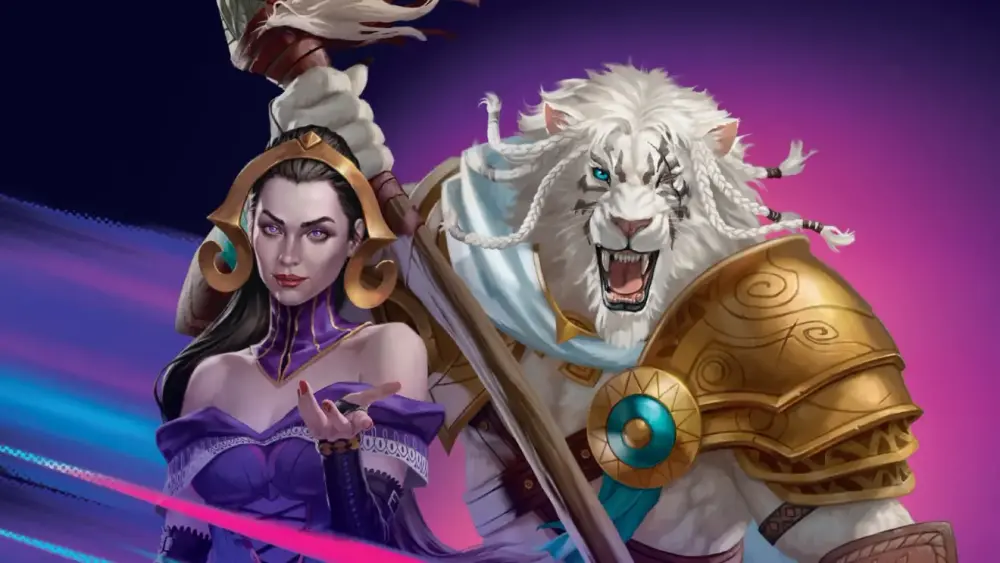
Magic Origins is the rare core set that feels like a complete experience. It’s story-first in a way core sets almost never are, and it lands because it focuses on five characters and commits.
Origins centers on:
Gideon, Jace, Liliana, Chandra, and Nissa, and the moments that ignite their sparks.
Multiple worlds tied to each character’s “before and after.”
The now-iconic cycle of flip planeswalkers, like Jace, Vryn’s Prodigy, which starts as a creature and transforms into a planeswalker.
Those “flip-walkers” were a genuine inflection point for Magic card design. They weren’t just popular, they changed what players expected a single card could do.
Origins also has that bittersweet “end of an era” feel. It was a capstone for the core set line for a while, and it went out by doing something core sets usually avoid: being ambitious.
If you like lore, if you like cohesive vibes, if you like opening packs where the cards feel like they belong together, this is my #1. No contest.
Honorable mentions (because yes, some I skipped are good)
I left out a bunch of core sets in the M10 to Origins stretch that are perfectly fine, sometimes excellent. They just didn’t hit me in the same way. That’s not a condemnation. It’s just how favorites work. Nobody asks you to justify why your favorite pizza isn’t “all pizza.”
FAQs
Are core sets still a thing in MTG?
Traditional yearly “Core Set 20XX” releases stopped after Core Set 2021. But Foundations fills a very similar role as a long-running, Standard-legal entry set.
Why did Wizards stop making core sets, then bring them back?
Because core sets had an identity problem, then Wizards realized how much they relied on them as an on-ramp and a flexible place for reprints and format support.
What makes Foundations different from older core sets?
Foundations is designed as a broad base set for new and returning players, but it’s also positioned to stick around in Standard for multiple years, which makes it feel more “foundational” than the old annual core set cadence.
Are these sets good for Cube?
Yes. Core sets are often stacked with clean removal, efficient creatures, evergreen mechanics, and generically useful build-arounds. They’re basically Cube maintenance fuel.
How do proxies fit into core set staples?
Core sets are full of “known quantities,” which makes them great for playtesting. If you’re using proxies, keep them clearly marked and play them where your group allows. If you want the broader context, here’s our internal primer: The History of MTG Proxies: From Playtesting to Modern Collectibles.