
TLDR
Arabian Nights and Portal Three Kingdoms are the purest “theme-first” sets Magic ever made, because they openly borrow from real-world stories.
Mirage and Stronghold are early proof that Magic could do cohesive places with a plot, not just a pile of cool cards.
Legends and Antiquities are Dominaria’s “myth and history” backbone, even if the game was still figuring out what rules text should look like.
Invasion is the big cinematic payoff: a plane-scale war where mechanics and story finally march in the same direction.
If you want early era MTG flavor sets that still hold up, these are the ones that feel like worlds, not spreadsheets.
Intro
We all say we love “flavor,” and then we immediately name Innistrad and Zendikar like Magic only learned worldbuilding after smartphones existed. The early era MTG flavor sets were doing heavy lifting with fewer tools, rougher templating, and art direction that occasionally felt like “please finish this by Tuesday.”
And somehow, when they hit, they really hit.
So here are seven early-era sets where the vibes are not just present, they are driving the car.
How I’m ranking these early era MTG flavor sets
Flavor is subjective, so I’m using a simple scorecard. If a set is “flavorful” but plays like it was designed by three committees in three time zones, it can still make the list. This is about world-feel, not whether a card is banned in seven formats.
Flavor Scorecard (rough, 0–5 each):
World clarity: Do you know where you are from the cards alone?
Mechanical identity: Do the mechanics reinforce the setting, or ignore it?
Names and art cohesion: Do the cards sound and look like they belong together?
Story presence: Do characters, factions, and events show up on the cards?
Distinctness: Could this only be this set?
7. Stronghold
Stronghold is a dungeon crawl with a portcullis for a set symbol and a plot that basically says, “You are entering the fortress. It will not be pleasant.”
Why it nails flavor
The whole set is built around Volrath’s fortress and the Weatherlight crew pushing deeper into it. The cards feel claustrophobic in the best way.
Creature cycles (Spikes, Slivers, weird experiments) feel like they belong in a mad stronghold full of engineered nightmares.
Proxy-friendly way to enjoy it in 2026
Build a “Rath raid” Commander night where everyone brings a deck with a “dungeon” or “escape” vibe (sac outlets, shadowy evasive creatures, prison pieces).
If you’re printing play pieces, prioritize legibility. Older cards love tiny text, and your table will not thank you.
6. Antiquities
Antiquities is Magic’s early proof that “lore” can be more than flavor text jokes. It tells a real story (Urza vs Mishra) and makes artifacts feel like the center of the universe.
Why it nails flavor
It’s basically The Brothers’ War as a set, with artifacts everywhere and a sense of arms-race escalation.
The names feel like relics, machines, and historical documents. The set reads like an in-universe museum exhibit, except the exhibits stab you.
Proxy-friendly way to enjoy it in 2026
Try an artifact history mini-cube: a tight stack of artifact-centric cards across eras that still feels like “Antiquities” when shuffled together.
If you want a better “how to build the experience” lens for proxies and cubes, this pairs nicely with ProxyMTG’s take on Magic design changes for proxy players.
5. Legends
Legends is not a single-location set so much as a myth anthology. It introduces the idea that specific named people matter, and it makes the game feel bigger than a wizard duel behind the local tavern.
Why it nails flavor
It’s the original “who is this, and why are they a big deal” set. Elder Dragons, legendary names, legendary places.
It’s a foundational moment for the idea that cards can be characters, not just “Goblin #14.”
Proxy-friendly way to enjoy it in 2026
Run a Commander night where everyone chooses a deck theme that could plausibly be a Legends tale: dragons, ancient heroes, doomed wars, cursed artifacts.
Keep expectations clear: these are old cards. Some are clunky. That’s part of the charm, like watching an early season of a show before the budget arrived.
4. Mirage
Mirage is one of the first times Magic feels like it’s showing you a place on purpose. Jamuraa isn’t just “generic fantasy land,” it’s nations, politics, and characters with stakes.
Why it nails flavor
A cohesive setting with distinct factions and a storyline that shows up on the cards.
You can feel the plane’s identity in the art, creature choices, and naming.
Proxy-friendly way to enjoy it in 2026
Build a “Mirage world” deck constraint: pick a commander and only include cards that feel like they belong in a hot, coastal, politically tense setting. You’ll be surprised how much that shapes deckbuilding.
If your group is newer to proxies, the social side matters as much as print quality. Proxy etiquette and intent are covered well in The History of MTG Proxies: From Playtesting to Modern Collectibles.
3. Invasion
Invasion is what happens when Magic decides to do an event set with a capital E: Phyrexia shows up, the plane rallies, and multicolor becomes the language of alliance.
Why it nails flavor
The “Coalition vs Phyrexia” framing is easy to understand from the cards.
The multicolor focus doesn’t just feel mechanical, it feels like the story: factions putting differences aside because they are about to be turned into chrome nightmares.
Proxy-friendly way to enjoy it in 2026
Build a Coalition deck with a clear identity (not just “five-color goodstuff”). Pick a theme that feels like wartime logistics: domain mana, rally effects, coordinated combat, big “turn the corner” spells.
For table clarity, add a quick pre-game line: “These are proxies for casual play. Everything is readable, and if you want oracle text I’ll pull it up.”
2. Portal Three Kingdoms
Portal Three Kingdoms is flavor-first design with basically zero shame about it. It’s historical fiction translated into Magic cards, and it commits so hard that it invents a new evasion keyword to fit the setting.
Why it nails flavor
It’s explicitly based on the Three Kingdoms era and the famous novel tradition around it, so the names, characters, and events feel grounded and consistent.
Horsemanship is one of the most “we did this purely for flavor” mechanics Magic has ever shipped. It’s flying, but make it cavalry.
Proxy-friendly way to enjoy it in 2026
Do a “Three Kingdoms legends” night: commanders and key cards from the set, supported by modern staples that match the vibe (armies, tactics, duels, loyalty).
Also, be honest with your pod: horsemanship is parasitic. If your group hates it, swap it for flying in your house rules and move on with your life.
1. Arabian Nights
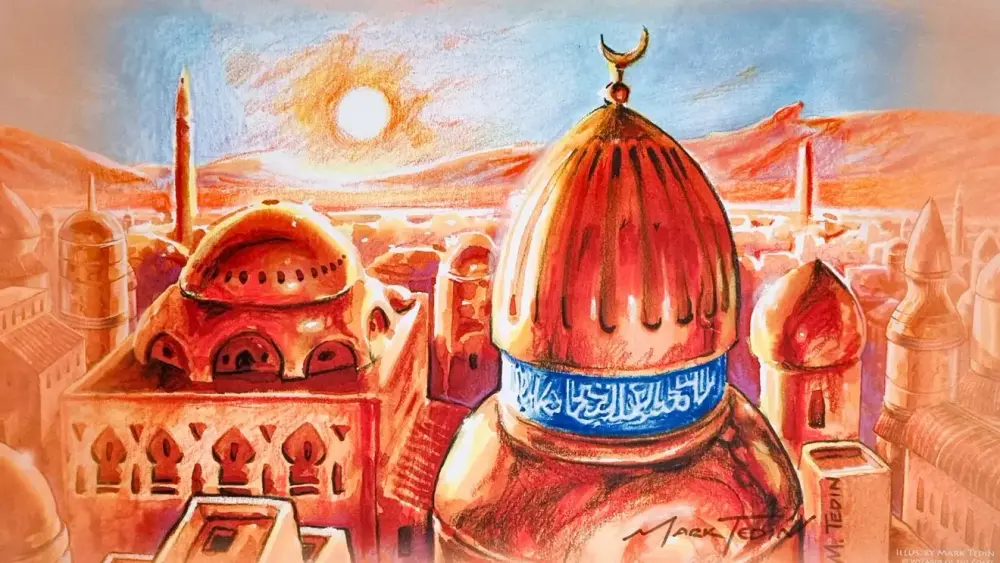
Arabian Nights is Magic’s first expansion, and it’s still one of the boldest flavor swings. It’s openly inspired by the Thousand and One Nights tradition and it feels like Magic temporarily stepped into a different genre.
Why it nails flavor
It’s cohesive in a way early Magic rarely is: the names, locations, creatures, and spells all point at the same source of inspiration.
The set is full of cards that feel like story artifacts, not just game pieces.
Proxy-friendly way to enjoy it in 2026
Build a “deserts and djinn” mini-module for Commander or Cube: deserts, wandering threats, bargains, curses, and weird old-world magic.
And yes, some of the cards are famously impractical. That’s fine. Not everything needs to be optimized. Sometimes the goal is to cast Flying Carpet because it exists.
Honorable mentions (because early Magic had a lot of personality)
The Dark: Magic tries “dark fantasy” early, and the set’s tone is so strong it still gets talked about decades later.
Urza’s Saga: a wildly powerful era with real story weight, even if the gameplay reputation sometimes eclipses the narrative.
Visions: not always the loudest set, but full of early examples of Magic learning how to make creatures feel like spells.
A quick Rule 0 script for running old-school flavor decks with proxies
Use this verbatim if you want:
“Quick heads up: I’m playing a nostalgia deck with proxies from old sets. It’s for casual play only, everything is readable, and I’m happy to show oracle text if anything’s unclear. Everyone cool with that?”
Short, clear, no weirdness. You are not asking permission to have fun, you are making sure nobody feels ambushed.
FAQs
What counts as an “early era” set in MTG?
For this list, I’m treating early era as Magic’s first stretch of expansions before modern-era worldbuilding became the default cadence. Roughly: the 1990s into the early 2000s.
Are these the “best” early sets to play?
Not necessarily. This is about flavor and world identity, not Limited balance, Constructed health, or whether the set accidentally caused a small apocalypse.
Can I use MTG proxies of these cards at my local store?
In sanctioned events, generally no. For casual Commander nights or unsanctioned play, it depends on the store and the group. Ask first, and be explicit that you are not trying to pass anything off as real.
Which of these sets is best for a themed Commander deck night?
If you want maximum cohesion, pick Invasion, Mirage, or Portal Three Kingdoms. If you want “storybook weird,” go Arabian Nights.
Why are some of these sets so expensive now?
Age, scarcity, collectability, and nostalgia. The important part is that none of those factors make the gameplay more fun, so proxying for casual play is often the sane option.