
TLDR
Magic had a real confidence problem in the late 90s: “Combo Winter” made games end in a blink, and the following power-down era left a lot of players unimpressed.
Wizards has described that stretch as “rocky” and “a slump”, and Invasion was deliberately designed as the “strong, but not broken” comeback set.
Invasion succeeded because it nailed three things at once: clear identity (multicolor), strong but interactive gameplay, and mechanics that aged well (hello, kicker).
Did it single-handedly save Magic? Probably not. Did it help pull Magic back onto stable ground and set the template for modern block design? Very much yes.
Picture this: you survive the late 90s, when games could basically end before you finish shuffling, and then you get handed a “powered-down” set where excitement goes to take a long nap. If you bounced off Magic around then, you weren’t alone.
So the question “Did Invasion save Magic: The Gathering?” isn’t just nostalgia bait. It’s a real way to ask whether one block can reverse momentum when a game is wobbling. Let’s look at what was happening, what Wizards was trying to fix, and why Invasion is remembered like a defibrillator with gold borders.
The simple version of what “saving Magic” means
“Save” is a dramatic word, but Magic players have never been known for underreacting.
For a set to “save” a game, it usually has to do at least two of these:
Stop the bleeding: players return, stores can run events again without begging, and the vibe stops being “are we sure this is fun?”
Restore trust: the audience believes future sets won’t be broken disasters or sleepy disappointments.
Reset the design direction: the set becomes a blueprint that later sets copy, refine, or build on.
Create durable gameplay: Limited is enjoyable, Constructed is playable, and the cards still matter years later.
Invasion doesn’t need to hit all four to matter. But it actually makes a strong case for most of them.
The late-90s problem: Combo Winter, then whiplash
Wizards staff have used the term “Combo Winter” for the Urza’s Saga era, describing an environment where games could be won in one or two turns. There’s a reason the jokes from that time were about the “early game” being the coin flip. That kind of play pattern doesn’t just warp tournaments, it burns out normal humans who wanted to cast creatures and pretend combat matters.
There’s even an old Wizards feature that bluntly claims Tolarian Academy was a major driver of people quitting, because it helped fuel that entire fast-combo era. Whether you take that as rhetorical heat or literal truth, it captures the emotional reality of the time: players were frustrated, and Wizards knew it.
Then came the course correction. One later Wizards column explains it plainly: Magic was going through “rocky years,” Urza’s block was wildly overpowered, and Mercadian Masques was pushed hard in the opposite direction to cool things down. That was understandable, but it created a different kind of problem: if the cards feel underpowered or the set identity doesn’t land, players don’t get excited to buy packs, draft, or build decks.
So by the time Invasion was being built, Wizards has described the game as being “in a bit of a slump” and in need of something “extra-exciting” to reinvigorate players. That’s not fan speculation. That’s the design team talking about their goal.
Why Invasion worked: identity, balance, and mechanics that aged well
Invasion’s secret weapon wasn’t just “gold cards are cool,” although yes, gold cards are cool. It was the combination of three deliberate choices.
1) A loud, clear theme people could feel immediately
Invasion wasn’t subtle about what it wanted: multicolor. Later Wizards writing points to Invasion as the start of an important design era where blocks were built around a single theme, and mechanics were chosen to reinforce it. In other words, the set wasn’t just a pile of cards, it was a message.
And players got the message. That matters more than it sounds. Wizards has also talked about how players complained Masques “didn’t have mechanics” because they weren’t labeled, which taught R&D that naming and clarity shape expectations. Invasion shows up right after that lesson and… surprise, everything is easier to parse.
2) Strong cards, but gameplay that still involved the other player
Wizards learned from Combo Winter that Magic needs interaction. Fast combo turns games into dueling solitaire, and that’s bad for long-term health. R&D has openly described that era as a warning sign and noted that it changed how they approached big mana, huge draw spells, and engine cards.
Invasion lands in a sweet spot: cards are powerful enough to be exciting, but the format isn’t defined by “hope you have Force of Will or you die.” It brought back the feeling that you could win by playing actual Magic: cast spells, trade resources, turn creatures sideways, make decisions that matter.
That’s a big part of why the block is still talked about as “fun” rather than “that time we all suffered together.”
3) Kicker (and friends) gave players flexibility instead of helplessness
Kicker is one of those mechanics that looks obvious in hindsight, which usually means it was a great invention.
Wizards has described the design brief for the next set after Masques in very specific terms: it needed to be strong without being overpowered, and the team leaned on multicolor plus new tools to make that possible. Kicker did a lot of heavy lifting because it let cards scale. Early game you play the spell, late game you pay extra and get something more. That smooths out draws and makes gameplay feel less like “I kept a hand and drew four lands in a row, goodbye.”
And kicker didn’t just work once. Wizards later calls it one of the most versatile mechanics ever and notes it became “deciduous,” meaning it can come back whenever a set needs it.
That kind of long-term usefulness is one of the strongest arguments for “this set mattered.”
Did Invasion save Magic: The Gathering? A fair verdict
Here’s the honest answer: Invasion probably didn’t save Magic all by itself, because Magic’s survival wasn’t dependent on one release like a movie sequel saving a franchise.
But Invasion absolutely looks like a pivot point:
Wizards staff described the period before it as rocky and slumping, and they built Invasion specifically to reinvigorate players.
Wizards staff later described Invasion as a “runaway hit” with unusually positive reception, and talked about how hard it was to follow.
Years later, Wizards still references Invasion’s success as the reason they chased multicolor again, even designing Ravnica in the shadow of Invasion’s popularity.
So if “saved” means “put Magic back on a path players trusted,” Invasion makes a strong case. It restored excitement without re-lighting the Urza’s-block dumpster fire, and it helped establish a modern philosophy: strong themes, better Limited, and mechanics that support fun decision-making.
That’s not just nostalgia. That’s design trajectory.
How to relive Invasion in 2026 (without turning it into a finance hobby)
Invasion is also one of the easiest old-school eras to revisit because the gameplay identity is so clear.
A simple checklist:
Draft a cube with real fixing. Invasion wants you to stretch colors. If your cube doesn’t support it, you’re not playing Invasion, you’re playing “two-color midrange with regrets.”
Build one classic deck and play it into friends’ modern decks. You’ll quickly see what aged well (spoiler: a lot) and what got power-crept.
Use proxies for casual playtesting if needed. Some Invasion staples and lands still carry real price tags for cardboard from 2000. If your goal is gameplay, not collecting, proxies keep the experiment cheap and honest.
If you want a ProxyMTG-friendly refresher on the proxy side of that last bullet, these are good starting points:
FAQs
When did Invasion release?
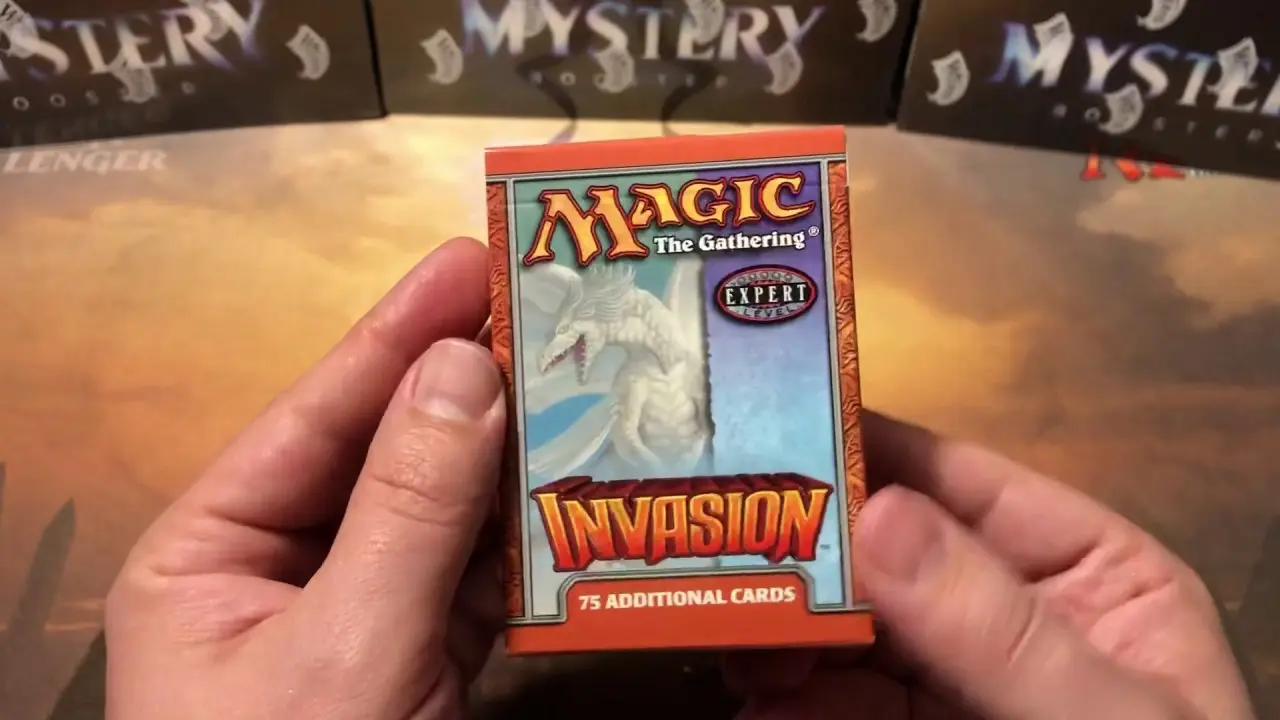
Invasion’s main release date is widely listed as October 2, 2000, with prerelease events occurring earlier in September 2000.
What was “Combo Winter”?
A player nickname (also used by Wizards staff) for the Urza’s Saga era where degenerate combo decks could win extremely fast, sometimes in one or two turns, leading to a miserable play environment.
Was Mercadian Masques actually “bad”?
“Bad” is subjective, but Wizards has described that period as a forced power correction after Urza’s block. Many players remember it as underpowered compared to what came before and after.
What did Invasion introduce that still matters?
The big one is kicker, plus a successful template for multicolor-focused design that influenced later blocks. The block also helped cement the idea that themes should be obvious and mechanically reinforced.
Is Invasion still worth playing today?
Yes, especially if you like multicolor gameplay, flexible spells, and a balanced feel. It’s also great “historical context” Magic: you can see design lessons happening in real time.