

TLDR
Improving at MTG is mostly reps plus one focused concept at a time, not collecting 40 “must-read” tabs and then never reading them again.
Start with fundamentals you can feel in every game (combat, tempo, sequencing, mana) before chasing galaxy-brain theory.
Use a staged plan: new/returning basics, intermediate decision-making, advanced matchup and technical edges.
If you want the fastest skill gains, Limited forces good habits (curve, combat math, resource trades) whether you like it or not.
Proxies are a training tool for testing lines, matchups, and upgrades in casual play. They are not a loophole for sanctioned events.
This is curated and opinionated on purpose. There are more great MTG resources than any sane person can consume. If you disagree with a pick, congratulations, you are already thinking like a Magic player.
Improving at MTG with a three-stage plan
If you want improving at MTG to feel real (instead of theoretical), you need a plan that matches where you are right now.
Here’s the clean version:
Stage 1 (New or returning): Learn the fundamentals that decide games even when nobody notices.
Stage 2 (Intermediate): Learn to identify your role, sequence cleanly, and stop making “I hope this works” plays.
Stage 3 (Advanced): Learn matchup planning, technical precision, and how to think in turns, not vibes.
You can read everything forever, sure. Or you can read one thing, play ten matches, and suddenly your brain starts doing the thing mid-game. One of these approaches is slightly more useful.
Stage 1: New or returning, learning to stop punting
At this stage, the biggest losses come from invisible mistakes that feel “normal” until they don’t.
The classic examples:
Playing your land after combat because you forgot you wanted to cast a spell before attacks.
Using removal on the wrong threat because you were annoyed, not because it was correct.
Treating combat like “turn sideways and see what happens,” which is technically a plan, just not a good one.
What to focus on (the stuff that pays rent)
Combat and planning your turns.
A lot of “beginner errors” are really sequencing errors. If your turn order is messy, your whole game is messy. Start by tightening the basics: what you do precombat, in combat, and postcombat, and why.
Tempo and card advantage, in normal-people terms.
Card advantage is “who has more stuff.” Tempo is “who gets to use their stuff first.” They fight each other constantly. If you can feel that tension, you are already improving.
Linear strategies.
When you are new, “do one thing well” beats “do five cool things badly.” That is not a forever rule. It’s training wheels that keep your deck from becoming a scrapbook.
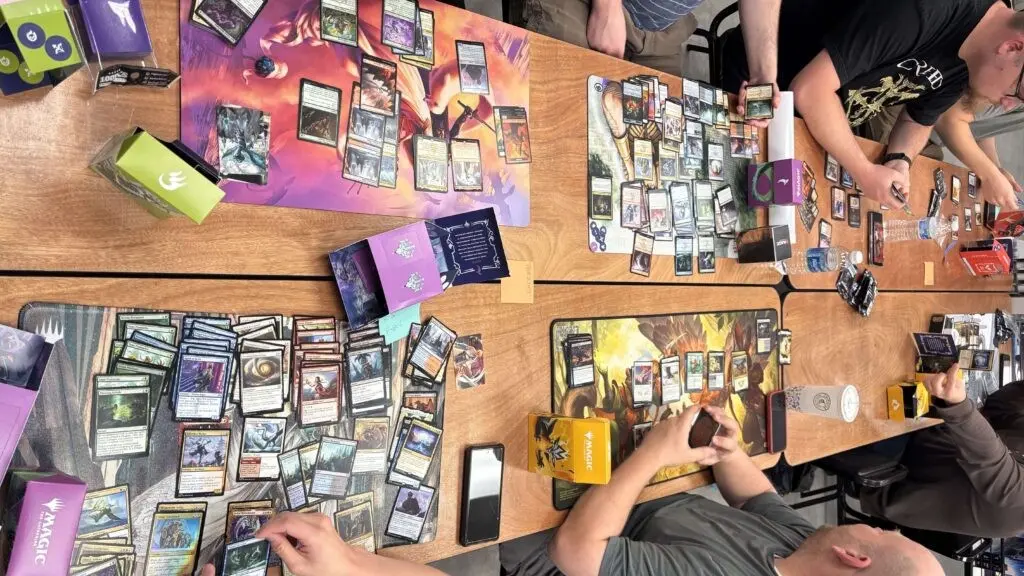
The one resource I recommend first
If you want a single starting point, Reid Duke’s Level One is still the best “I want fundamentals that actually matter” course. It’s large, and that’s the point. Don’t binge it. Read a bit, play games, come back. (Yes, you have permission to re-read. Nobody is grading you.)
If you are especially new, start with the chapters on attacking and blocking, tempo, and linear strategies. Then play. Then come back.
A tiny post-game checklist (Stage 1 version)
After any match, ask yourself:
Did I miss a land drop because I got distracted?
Did I use removal because I was scared, or because it answered their plan?
Did combat go weird because I didn’t plan the turn around it?
If you answer even one of those honestly, you’re already improving at MTG. The bar is not “never make mistakes.” The bar is “notice the mistake while it’s happening next time.”
Stage 2: Intermediate, making decisions on purpose
This is where players plateau, because they can “play a normal game” and that feels like mastery. It is not mastery. It’s just the part where your punts got quieter.
Stage 2 is about learning three skills that make you feel unfair:
Role identification (am I the beatdown or the control?)
Sequencing (what order do I do things, and what info do I reveal?)
Threat management (which problem matters right now vs later?)
Role: Who is the beatdown?
“Who’s the Beatdown?” is still required reading because it solves a problem players don’t realize they have: both players think they’re supposed to do “their thing.” In many matchups, one player must turn the corner and become the aggressor, even if their deck label says “control.”
When you get this wrong, everything feels off. Your removal looks bad. Your attacks look risky. Your endgame never arrives. It’s not cursed. You just picked the wrong job.
The one-word upgrade: Why?
When you review a decision, ask one word: why.
Why did you keep that hand? Why did you shock yourself? Why did you fire removal now? If you can’t answer, you found a hole in your decision process. Fixing that hole is how you jump tiers.
Line-up thinking: answers are not interchangeable
Line-up theory is basically “don’t waste your good answers on the wrong problems.” If you have one clean way to answer a specific threat, and you spend it on something else, you’re not unlucky. You are self-sabotaging with extra steps.
A practical way to use this in real games:
Identify their must-answer threats.
Identify your clean answers.
Save the clean answers for the must-answer threats unless you are about to die.
Yes, sometimes you still die. Magic remains Magic. But you die less often for dumb reasons, which is a meaningful life upgrade.
Mulligans: the most important decision you make in silence
If you want a shortcut: mulligans are hard because they are about plans, not hands. A hand that “does stuff” can still be terrible if it doesn’t do the right stuff in the right window.
Stage 2 practice tip: after every mulligan decision, write a one-sentence reason. If your reason is “seems fine,” that is not a reason. That is your brain filing paperwork with “lol.”
Stage 3: Advanced, finding edges without losing your soul
At this point, you probably:
know the rules well,
recognize archetypes,
have format experience,
and can explain most of your choices.
Now the gains come from tighter planning and better technical execution. Also from humility. Which is rude, but true.
Fundamental Turn: when your deck actually matters
“Clear the Land and the Fundamental Turn” is old-school, but it teaches a brutal question: what turn does my deck start doing its real thing, and can the format punish me before that?
This idea scales everywhere:
In fast formats, you need to affect the board early or interact efficiently.
In slower formats, you need inevitability or a plan that beats theirs long-term.
Advanced players stop thinking “my deck is good” and start thinking “my deck is good at turn X, in these matchups, with these sideboard plans.”
Technical play: stop leaking free percentage points
Technical play is not glamorous. It’s not a spicy combo. It’s:
clean sequencing,
correct triggers,
using your mana efficiently,
tracking hidden information,
and not punting because you got excited.
If you want a harsh truth: at high levels, the game is often decided by small mistakes that look like nothing. The good news is you can fix them. The bad news is you have to notice them first.
Limited: the fastest “get better” accelerator
If you want improving at MTG to happen faster, play Limited. Draft and Sealed force you to practice the fundamentals because you can’t hide behind your lovingly curated netdeck.
Limited improves:
combat math,
curve discipline,
resource trades,
playing from behind,
and evaluating what matters on a messy board.
Two frameworks that make Limited click
Quadrant Theory: evaluate a card by how it plays when you are developing, at parity, ahead, or behind. It helps you stop overrating “win-more” cards that look cool and do nothing when you’re losing.
Drafting the Hard Way: stay open early, read signals, and move into the lane that’s actually available. In other words, stop forcing your favorite colors like you’re trying to prove a point to your past self.
Limited in one paragraph (because you still have a life)
Most Limited decks want 40 cards, usually two colors, usually around 17 lands, and a curve that lets you deploy early and still have a top end. Removal matters, creatures matter, and synergy matters more than your nostalgia for BREAD. If you want to level up, watch strong drafters who explain picks and listen to Limited-focused breakdowns that teach evaluation habits, not just “pick this rare.”
Proxies as practice equipment (not a disguise)
Proxies are one of the best tools for improving at MTG because they let you practice the parts that actually build skill: reps, iteration, matchup learning, and tuning.
They also come with one extremely simple boundary: proxies are for casual play and testing, not sanctioned events. In sanctioned play, “proxy” has a narrow meaning and is typically something a judge issues in limited situations, not something you bring because you felt like it.
How proxies help you get better (the useful ways)
1) You can test a deck before you commit.
If you want to learn a new archetype, the best teacher is games played with the actual list. Proxies let you get reps without turning your bank app into a jump scare.
2) You can build a “gauntlet” for matchup reps.
If you mostly play Commander, your gauntlet might be “common pod archetypes.” If you play 60-card formats casually, your gauntlet might be “top decks I keep losing to.” Either way, you improve faster when you practice against real problems instead of shadowboxing.
3) You can iterate without friction.
Swapping 10 cards, playing 5 games, and swapping again is how decks become good. It’s also how pilots become good, because you learn what changes actually matter.
If you want proxy printing to stay low-drama, prioritize readability and consistency. If you are in the “which printing is this” zone, our internal guide on choosing versions is here: MTG Card Printings Explained: Choosing the Right Version When Names Collide
And if your “practice format” is Cube, proxy management is basically a skill in itself. Here’s the cube-specific workflow: MTG Proxying a Cube: Keep It Updated Without Reprinting Your Life Story
The 15-second Rule 0 script (use it, enjoy peace)
“Hey, quick check, I’m testing a list with proxies tonight. They’re sleeved and readable. Are proxies cool in this pod?”
That’s it. That’s the whole spell. Most proxy drama is surprise, not proxies.
A simple practice loop that actually sticks
If you want a repeatable system for improving at MTG, try this loop for two weeks:
Pick one concept (role, sequencing, mulligans, combat math).
Play five matches focusing on that concept.
Review one decision per match and write one sentence about it.
You will be shocked how quickly your brain starts spotting patterns mid-game. Not because you became a genius, but because you gave your attention a job instead of letting it wander around the battlefield like a confused 1/1.
FAQs
What should I focus on first if I want to start improving at MTG?
Start with sequencing and combat fundamentals. Most early losses come from turn structure mistakes and bad attacks or blocks, not from lacking some secret tech.
Is Limited really the best way to get better?
It’s one of the best accelerators because it forces fundamentals and punishes sloppy curves. If you hate it, you can still improve in Constructed, but Limited is the gym where nobody lets you skip leg day.
How long does it take to get noticeably better?
If you play consistently and review even one decision per match, many players notice improvement in a few weeks. The bigger jump usually comes when you stop trying to fix everything at once.
I tilt when variance hits. Any tips?
Variance happens. Your job is to control decisions, not outcomes. When you feel tilt coming, pause and ask: “What was the best line?” If you can answer that, you did your part. Magic will still occasionally bonk you on the head. That’s the game.