
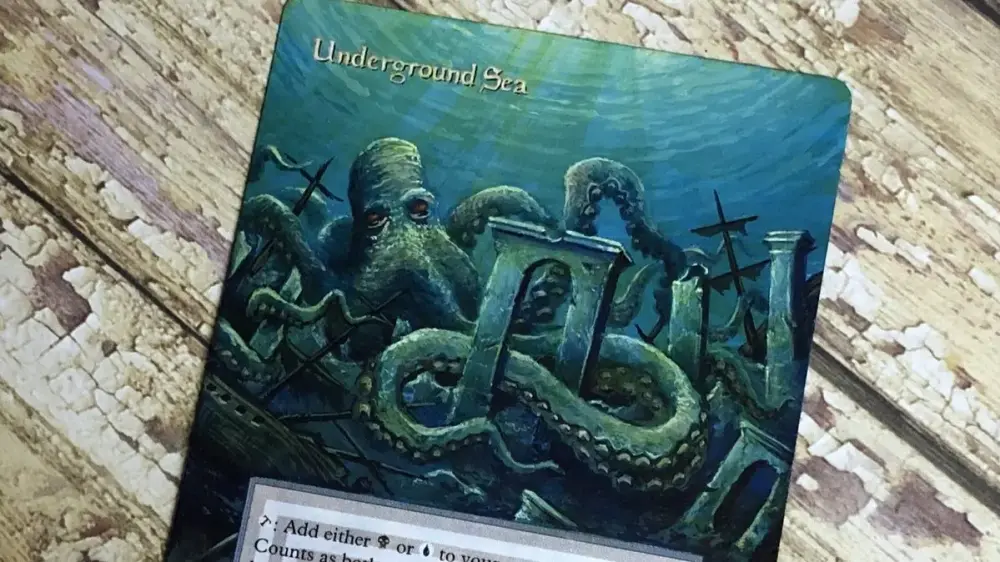
TLDR
MTG altered proxies are the safest way to learn alters because your mistakes cost you nothing (except dignity, which is already a renewable resource).
Start with a skill ladder: Level 1 border extensions, Level 2 background fills, Level 3 full art replacement.
Practice the boring fundamentals first: thin layers, clean edges, color matching, and sealing.
If you can’t read the card across the table, it’s not an alter, it’s performance art.
You know what’s a terrible “first alter” canvas? A card you actually like. Even worse if it’s expensive. MTG altered proxies fix that problem immediately: they are the perfect practice dummy for learning card alters because mistakes are free, emotionally and financially. Mess up the blend? Congrats, you learned something. Paint over the mana cost? Also learning, but louder.
This post helps beginners practice card alters with proxies using a simple skill ladder and a “what to practice first” checklist, so they can improve fast without sacrificing their wallet to the art gods.
Why proxies are the best way to learn card alters
When people say “just practice,” what they usually mean is “practice on something you don’t mind ruining.” Proxies are exactly that.
What proxies do for you
They remove the fear tax. If every brushstroke feels like it’s costing $20, you will paint like a hostage.
They let you repeat the same exercise. You can print ten copies of the same card and do ten border extensions in a row. That is how skill happens.
They encourage experimentation. Try paint, try markers, try mixed media, then decide what you actually like.
Proxy alter boundary, stated plainly
Keep proxy alters clearly proxies. Don’t try to make them pass as authentic cards, and don’t use them where they aren’t allowed. Your goal here is art practice and table readability, not “how to become the villain in a very boring heist movie.”
The beginner setup, minimal gear, maximum sanity
You can spend a fortune on supplies. You can also spend twelve dollars and get 80% of the results. Choose your destiny.
Starter kit that actually matters
Proxy printouts (multiple copies of the same card, you want repetition)
Acrylic paint (basic set is fine, you can level up later)
Two brushes: a small flat and a tiny liner brush (detail work)
A waterproof fineliner (for crisp edges and little fixes)
Painter’s tape (masking straight lines is not cheating, it’s adulthood)
A wet palette (optional, but it keeps paint workable longer)
Matte varnish or clear sealer (for protection)
Sleeves (because you are not raw-dogging altered cardboard)
One prep step that saves pain later
Before painting, lightly prep the surface so paint sticks better. Many alterists do this by gently rubbing the varnished card surface with a soft eraser, then cleaning away residue. It’s not glamorous, but neither is watching your paint bead up and slide off like it’s late for work.
The simple skill ladder for proxy alters for beginners
If you try Level 3 first, you will learn two things:
this is harder than it looks
you now own a very confident mess
Instead, climb.
Level 1: Border extensions
What it is: Extending the existing art outward into the border, usually to create a “borderless” look while keeping the main art intact.
Why it’s perfect first
You practice color matching without inventing an entire scene.
You learn edge control (where most beginners suffer).
You can keep the rules text and mana cost untouched, which is good because you still want to play the card.
Beginner drills
Extend one corner only, then stop.
Practice matching a single dominant color (sky, forest, dark stone).
Paint up to a taped edge, remove tape, admire the clean line like a normal person.
Common failure mode
Thick paint that leaves texture. Thin layers win. Always.
Level 2: Background fills
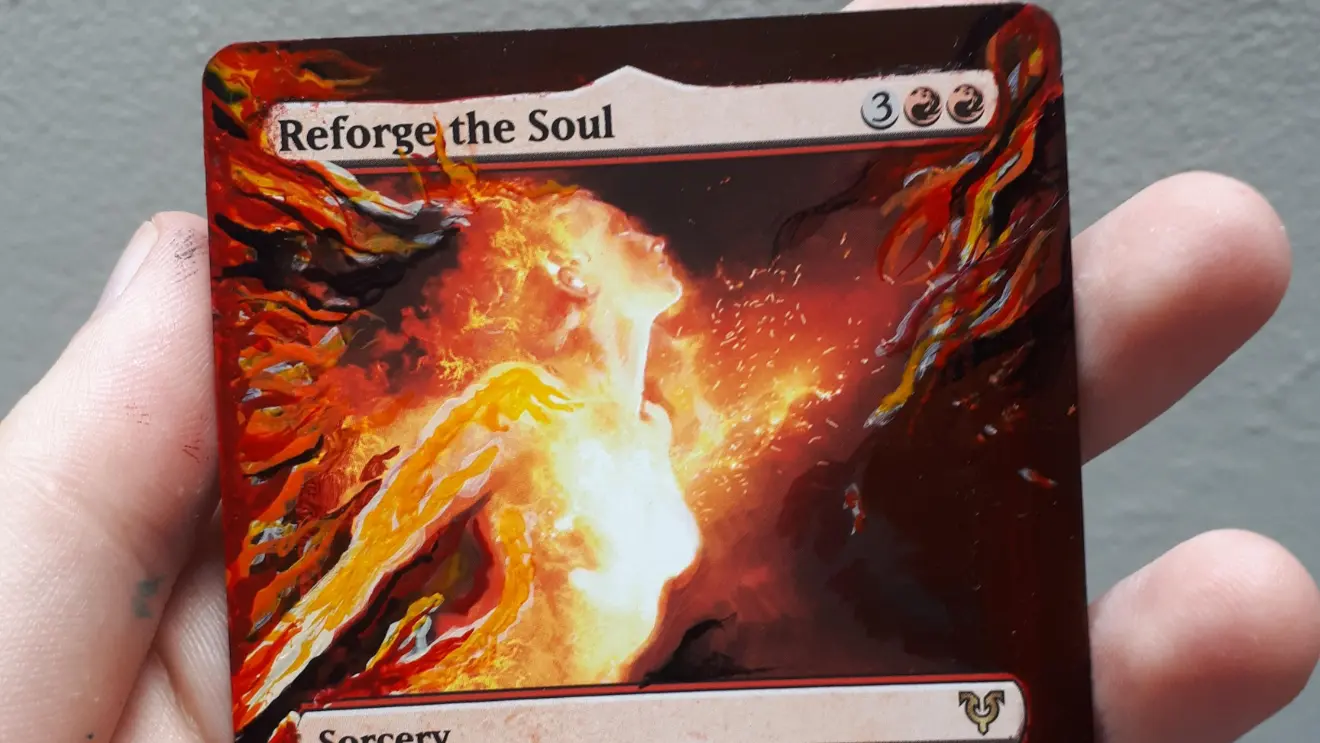
What it is: Repainting or smoothing backgrounds, removing small elements, filling around a subject, or unifying the art behind the character.
Why this is the “real” learning jump
Now you’re doing blending, gradients, and values. This is where your proxy practice starts to look like actual art instead of “I colored outside the lines, professionally.”
Beginner drills
Pick cards with simple backgrounds (fog, sky, single-color gradients).
Practice a two-color blend (dark to light, warm to cool).
Fill around the subject while preserving hard edges.
Common failure mode
Overworking wet paint until it gets chalky. Put it down. Let it dry. Go drink water and pretend you meant to take a break.
Level 3: Full art replacement
What it is: Replacing most or all of the original art with your own art.
Why it’s hardest
Because it’s basically a tiny painting with weird constraints and a high probability you’ll accidentally paint over something important. Also, you now need composition, lighting, and confidence. Rude.
How to not implode
Do a quick sketch first (pencil or light marker).
Block in big shapes, then refine.
Work background to foreground, dark to light.
Seal only after everything is fully dry and you’re not “fixing one last thing” for the 14th time.
What to practice first checklist
This is the part most people skip because it feels too basic. Which is why most first alters look like a crime scene. Start here.
Card choice: Pick cards with simple backgrounds and big color areas.
Workspace: Tape the card down to something rigid so it doesn’t slide around.
Paint control: Use thin layers. If it looks streaky, that’s fine. Another thin layer fixes it.
Color matching: Mix colors deliberately. Don’t rely on “close enough” unless you want “noticeably wrong.”
Edges: Practice clean border lines with tape, then freehand once you can do it taped.
Blending: Practice a two-step gradient (dark, mid, light). Keep it simple.
Detail restraint: Add details last. Early details get buried.
Dry time: Let layers fully dry before the next layer, patience is the least fun skill and the most important.
Legibility: Keep name, mana cost, and rules text readable. If it’s not readable, it’s not table-friendly.
Seal test: Seal one practice card first before sealing your “good” one. Some sealers change texture or sheen.
“I messed up.” Good. Here’s how to recover.
Mistakes are not a sign you’re bad. They are the only evidence you actually practiced.
Fixes that usually work
Paint went outside the area: Let it dry, then repaint the edge with the correct base color.
Blending looks dirty: You likely overmixed. Let it dry, glaze a thin layer of the dominant color over it.
Texture is bumpy: Paint was too thick. Sanding a card is a risky hobby. Better plan: thinner paint next time, and accept small texture as the cost of learning.
Card warps: Too much moisture. Use less water, less wet paint, and tape the card down while it dries.
When to call it and move on
If you keep “fixing,” you can turn a decent alter into a muddy disaster. Sometimes the correct move is to stop, label it “Test #3,” and do the next one cleaner.
Sealing and finishing so your alter survives shuffling
Unsealed alters can scuff, smear, or pick up fingerprints. Sealing is the difference between “I made art” and “I made a temporary art exhibit.”
Practical sealing rules
Use light coats, not one heavy coat.
Let coats dry properly before adding another.
Seal in reasonable conditions. Extreme cold, heat, or humidity can make finishes behave badly.
If you care about feel in sleeves, minimize layers. Too many coats can add thickness and texture.
Matte varnish is popular because it keeps glare down and tends to feel more “card-like” in sleeves. Gloss can look great too, but it can also announce itself under lights like it’s trying to be photographed.
Using altered proxies in actual games without annoying everyone
You do not need a speech. You need clarity.
Table-friendly rules
Keep the card instantly identifiable at a glance.
Keep text readable, especially if your alter changes the frame.
Sleeve consistently. Opaque sleeves reduce the “marked card” problem for mixed piles.
If anyone looks confused, say what the card is once, then keep playing.
If you want extra credit, pick printings that are naturally readable before you alter. Card readability is a recurring theme for a reason. Confusion is the real win condition of chaos decks, not your paint job.
FAQs
What paint is best for practice card alters?
Acrylic is the common starting point because it’s flexible, layers well, and is forgiving. Thin layers matter more than brand. A small set plus white and black can take you surprisingly far.
Do I need to prep the surface before painting?
It helps. Many alter workflows lightly clean or dull the surface varnish first so acrylic adheres better. It’s one of those annoying steps that makes everything easier after.
Should I seal altered proxies?
If you plan to play with them, yes. Sealing helps prevent scuffs and scratches. Use light coats and test your sealer on a throwaway first.
How do I keep my altered proxy from feeling “thick” in sleeves?
Use thin paint layers and avoid piling on sealant. Thickness usually comes from heavy paint and too many finish coats.
Can I bring altered proxies to events or an LGS?
Ask the organizer or the store. Many casual tables are fine with proxy alters that are readable and clearly proxies.