
TLDR
You do not need to own every token your deck could theoretically make. You need the ones that actually show up.
Bring 1–2 copies of each common token, then use a die (or a small stack) for the count.
Always include tokens that change decisions: Treasures, Clues, Food, Blood, Map, Powerstone, Junk, and your deck’s main creature tokens.
Don’t forget emblems. If your deck makes one, it tends to matter forever (rude, but true).
“Readable” beats “pretty.” If people keep asking what your token is, it’s not a token. It’s a recurring meeting.
MTG tokens and emblems are the little cardboard side-quests that quietly decide whether your game feels smooth or turns into a tabletop escape room. The goal here is simple: you don’t over-order a mountain of tokens you’ll never use, but you also don’t forget the few that keep your board state honest and your turns fast.
What tokens and emblems actually are (and why your table cares)
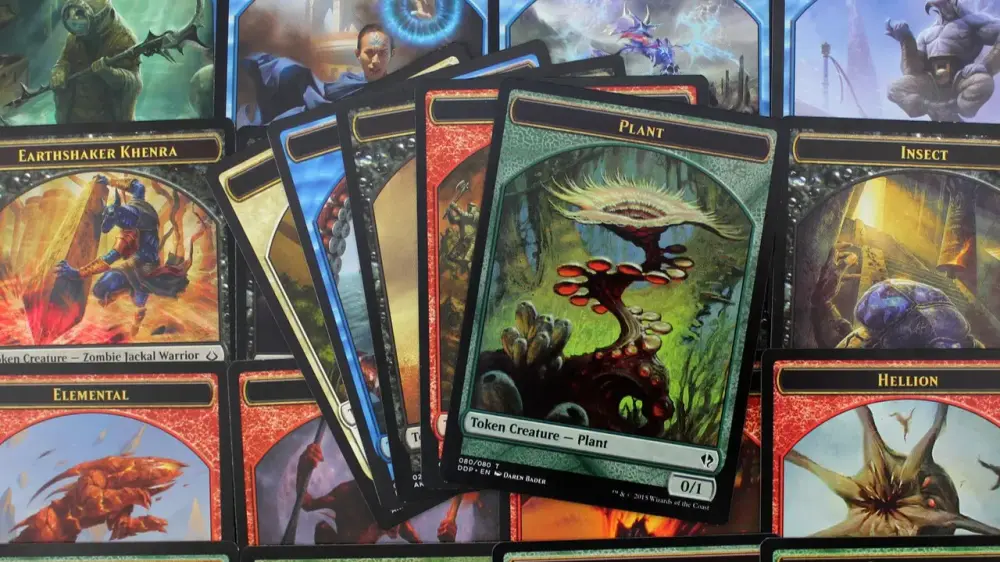
A token is a marker that represents a permanent that isn’t represented by a card. In other words: Magic sometimes creates stuff, and it expects you to represent that stuff in a way that doesn’t require telepathy.
An emblem is also a marker, but it represents an object with one or more abilities that sits in the command zone. Most emblems are basically “this rule is true for you now,” and they’re notoriously hard to interact with, because they’re not permanents. So if you forget your emblem exists, the game will politely remind you by ruining your math later.
One useful (and sanity-preserving) point: official tournament policy treats tokens and other game aids as game materials, and you can use any representation that is clear to both players. That’s the standard. Not “official.” Not “foil.” Not “hand-painted by a monk.” Clear.
The “Token Kit” framework: bring less stuff, get more clarity
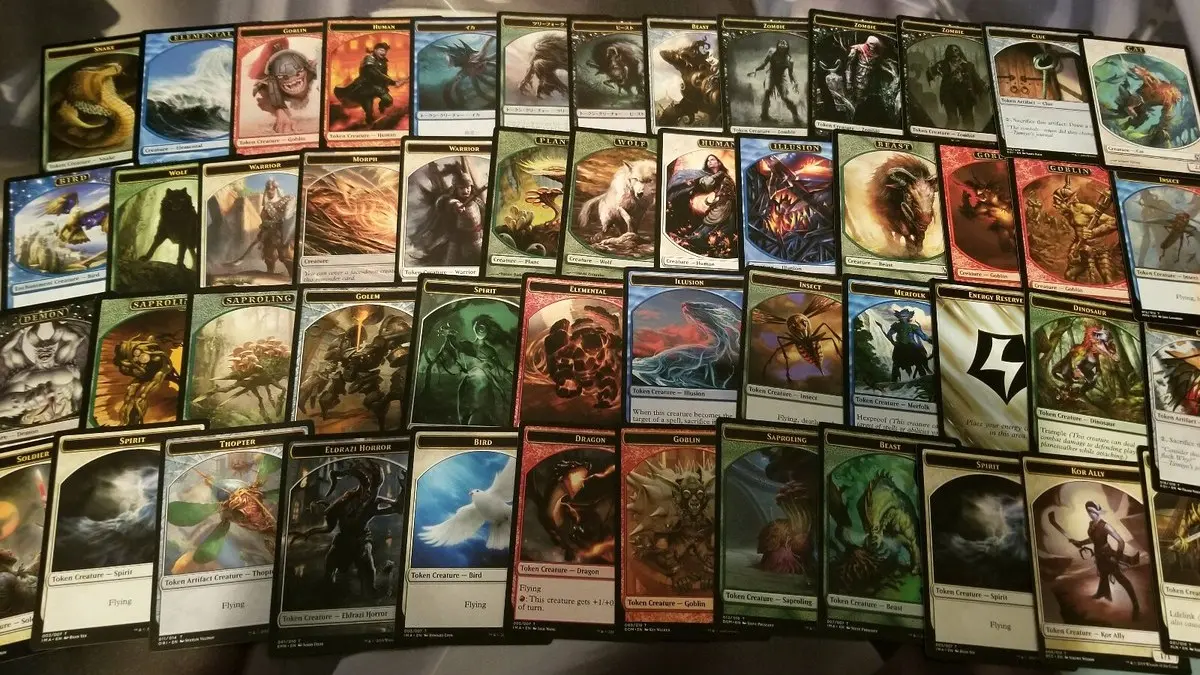
Here’s a practical way to build a token/emblem kit that fits your deck, not the entire history of Magic.
Tier 1: The Minimalist (still functional, mildly responsible)
You bring:
1 copy of each token your deck makes often (plus a die for the count)
1 blank token or dry-erase card for weird one-offs and copy tokens
1 emblem marker if your deck can create an emblem
This is enough for most Commander decks that aren’t trying to create a small nation-state of Saprolings.
Tier 2: The Comfortable (the sweet spot for most players)
You bring:
2 copies of each “frequent flyer” token (so tapped vs untapped is easy)
The main tokens your deck actually wins with
A small stack of generic placeholders (blank tokens or sticky notes in sleeves)
This is the best balance between “prepared” and “I brought a second backpack for accessories.”
Tier 3: The Table Hero (for token decks, go-wide, and people who enjoy organization)
You bring:
3–5 copies of your primary creature token
2 copies of common resource tokens (Treasure, Clue, Food, etc.)
Dedicated emblem cards (especially if multiple players can produce similar emblems)
A consistent system for counters and status (dice, beads, whatever you trust)
If your commander could reasonably be described as “an HR violation for the combat step,” you probably want Tier 3.
What to include (the tokens that actually matter)
You’re trying to cover two categories:
tokens that show up a lot, and
tokens that change decisions.
The “decision tokens” (include these if your deck can make them)
These tokens affect sequencing, threat assessment, and interaction. If they appear and you don’t represent them clearly, the game slows down immediately.
Treasure: “How much mana do you have?” is a real question, not a vibe.
Clue and Food: they represent future cards or life, and players will plan around them.
Blood, Map, Powerstone, Junk: newer sets love “artifact tokens with text.” Treat them like real permanents, because they are.
Role tokens (Aura Roles): these are especially easy to mis-track because they attach and have rules text. If your deck makes Roles, bring the Role(s) you create most.
Rule of thumb: if the token has rules text, bring a readable version. A tiny die that says “Clue” in your heart is not a game object.
Your deck’s main creature tokens (bring enough to show tapped vs untapped)
If your deck routinely makes creature tokens, bring at least two physical markers for that creature token so you can show:
some tapped, some untapped
some summoning sick, some not (yes, people forget)
one is equipped / enchanted / has counters
For a token deck, bring 3–5 of the primary creature token and use dice for the count beyond that. You don’t need thirty 1/1s on the table. You need one 1/1 that everyone understands represents thirty 1/1s.
Copy tokens and “this token is a copy of…” situations
Copy tokens are where clarity goes to die.
If your deck regularly copies creatures, bring:
blank writable tokens (or dry erase)
and a habit: write “Copy of X” plus the two or three changes that matter (haste, “exile at end step,” extra types, etc.)
You do not need to rewrite the entire card text at the table. You do need enough info that nobody has to ask every turn what it is.
Tokens that enter tapped, attacking, or with conditions
Some effects create tokens tapped and attacking, or with “sacrifice/exile at end of combat,” or with a temporary buff. Those are easy to misrepresent and accidentally cheat with, even if you’re being honest.
If your deck does this often:
bring two physical markers so one can be visibly tapped
consider using a separate row for “temporary tokens” that will leave later
This keeps you from “forgetting” to exile something that was always supposed to go away. Magic loves memory tests. You can opt out by being organized.

Don’t forget emblems (because they don’t go away just because you stop thinking about them)
If your deck can create an emblem, include an emblem marker. Period.
Emblems are not permanents, and they hang out in the command zone providing ongoing abilities. They’re easy to forget and hard to remove, which is an elite combo for causing arguments.
Common emblem situations:
Planeswalker ultimates that give you a persistent effect
Mechanics that create specific emblems (yes, some modern mechanics do this)
Multiple emblems over a game (rare, but it happens in Superfriends and certain grindy pods)
If you might create more than one emblem, bring multiple markers or a writable system so you can track which emblem is which.
What to skip
This is the part that saves money and storage space.
Skip tokens you create once per night
If a card in your deck makes a token “sometimes” and it’s not a core plan, you can cover it with:
one blank token
or a generic placeholder that you label
You don’t need to buy a dedicated token for a single effect you see once every ten games. That’s how you end up with a token box that weighs more than your deck.
Skip “full sets” of every token your colors can produce
Commander players love buying accessories like they’re preparing for a long winter. Resist the urge.
Instead, build your kit from your actual list:
Look for “create” and “token”
Note the repeating ones
Note the decision tokens
Everything else can be handled by blanks
Skip duplicates beyond what improves readability
More copies only help if they make board state clearer. Past that, they’re just collectibles, which is totally fine, but it’s a different project.
A useful ceiling:
Creature tokens: 3–5 of the main one
Artifact resource tokens: 2 of each common one
Everything else: 1 plus a blank system
If you have twenty Treasures on board, the count matters more than the art.
Readability rules that keep games moving (and keep you out of trouble)
Here’s the standard that works in casual pods and also holds up in more formal play: make it obvious.
1) The token should say what it is
At minimum, a readable token marker should communicate:
name or type (Treasure, 1/1 Soldier, etc.)
power/toughness for creature tokens
any relevant keywords or rules text
If your table has to ask what your token is more than once, the representation is failing.
2) Use dice for quantity, not identity
Dice are great for “I have 12 of these.” Dice are terrible for “this die represents a 2/2 flyer that can sac to draw a card.”
If the object has text, use a token. If it’s just the count, use dice.
3) Separate tokens by status
If some are tapped, some aren’t, you need a representation that shows that clearly:
different rows
different physical markers
or a token plus a “tapped pile”
Don’t stack mixed-status tokens under one die and then try to remember which ones attacked. Your future self will lie to you.
4) Keep emblems and “global markers” in a dedicated spot
Put emblems (and any similar always-on effects) near your commander or in a consistent command-zone area. If it’s floating somewhere between lands and snacks, it will be forgotten.
5) If you’re at an event, don’t get clever
In sanctioned play, your deck cards have strict requirements, but tokens and game aids still fall under the “clear representation” standard. Also, if you’re using dice for anything random, tournament rules care that the method is actually random, and spindown-style dice are specifically a problem for that purpose. For tracking quantities and counters, they’re fine. For randomness, don’t invite the judge over for a conversation you didn’t want.
FAQs
Do I need official MTG tokens?
No. You need representations that are clear to both players. Official tokens are nice, but “nice” is not the rules.
How many tokens should I include for a Commander deck?
Most decks are covered with 1–2 of each frequent token, plus a way to track quantity. Token decks want 3–5 of the primary creature token so tapped vs untapped stays readable.
What’s the best way to handle copy tokens?
Use a blank writable token and label it “Copy of X,” then note the differences that matter (haste, exile at end step, extra types). Clarity over perfection.
Do emblems need a physical card?
They don’t need one, but you should use a dedicated marker. Emblems live in the command zone and are easy to forget, which is why they are responsible for so many “wait, since when?” moments.
What if my deck creates a ton of different tokens?
Bring blanks and only print the ones that show up constantly or have rules text that affects decisions. You’re building a kit, not a museum archive.