
Magic: The Gathering has printed tens of thousands of cards. Most of them are perfectly reasonable. Some are even fun. And then there’s this list: the cards that bend the rules so hard the rules start filing complaints with HR.
“Most powerful” can mean a few things: raw efficiency, game-warping effects, or the kind of card that forces entire formats to either adapt around it or put it on a list that basically says “no, not like that.” For this list, i’m focusing on the all-timers—the cards that show up in every “broken” conversation, often because they’re banned or restricted somewhere for being too good at winning games.
Let’s do the classics first, because yes, Magic started with a tiny handful of cards that look like they were designed during a sugar rush.
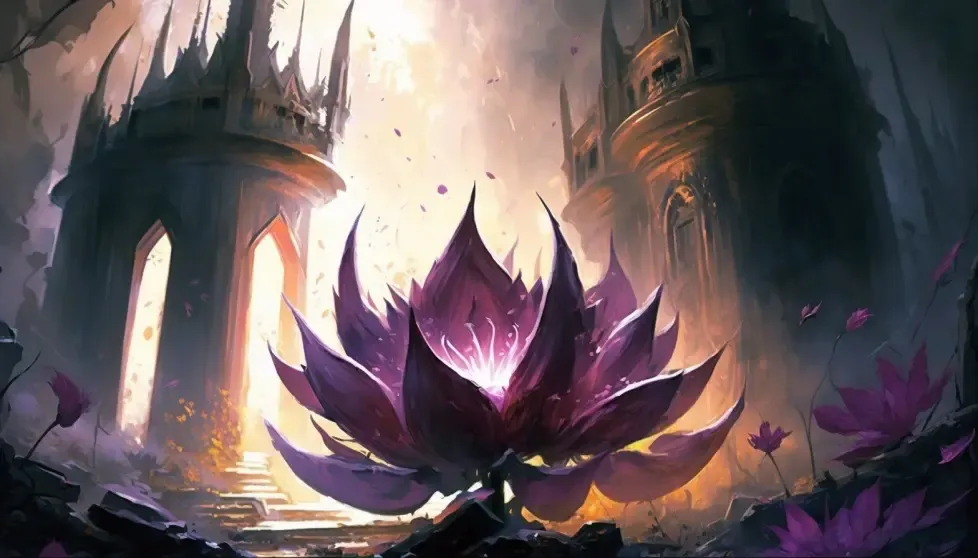
1) Black Lotus
If Magic has a patron saint, it’s a free artifact that turns into three mana immediately. No setup, no downside, no “at the beginning of your upkeep.” Just: here’s enough resources to do something stupid right now.
Black Lotus is the template for why free mana is dangerous. It doesn’t just accelerate you—it lets you skip the part where your opponent gets to participate.
2) Ancestral Recall
One blue mana to draw three cards. That’s it. That’s the crime.
Card advantage is one of the strongest forces in MTG, and this is card advantage at a rate that makes modern design look like it’s apologizing for existing. It turns “i kept a decent hand” into “i now have an entire new hand, good luck.”
3) Time Walk
Two mana: take an extra turn. Which is basically “draw a card, play a land, attack again, cast more spells, and also your opponent doesn’t get to respond in-between.”
Extra turns are already strong when they cost a small fortune. Time Walk is strong because it’s cheap enough to be used like a tempo play… and then it snowballs into “oh, you’re dead now.”
4) Mox Sapphire
Zero mana artifact. Taps for blue. That’s a land that doesn’t cost your land drop.
Mox Sapphire (and its siblings) are the cleanest version of “fast mana breaks Magic.” Playing extra lands is already powerful. Playing extra lands for zero is how games stop being games.
5) Mox Jet
Same story: zero mana, taps for black. Which is especially fun because black is the color that already loves rituals, tutors, and graveyard nonsense. So now you get to do all of that… faster. Obviously a great idea. No notes.
6) Mox Ruby
Zero mana, taps for red. It’s easy to underrate the red Mox until you remember that red decks are often designed to convert early mana into immediate pressure. Mox Ruby is basically “start the race two laps ahead.”
7) Mox Pearl
Zero mana, taps for white. White doesn’t always get credit for “broken,” but free acceleration makes any color look like a problem.
Even in decks that aren’t trying to combo, free mana lets you deploy threats and answers early enough that the other player spends the game catching up.
8) Mox Emerald
Zero mana, taps for green. Green already treats mana as a suggestion, so giving it a free extra source is like handing fireworks to the kid who already found the matches.
9) Timetwister
Everyone shuffles their hand and graveyard into their library, then draws seven. In a vacuum, that sounds symmetrical and “fair.”
In practice, it’s a reset button that’s most abusive when you emptied your hand first (because you had free mana rocks and cheap spells) and your opponent didn’t. So you get to reload while they lose the advantage of holding answers.
Timetwister is also the “weakest” of the Power Nine in a lot of arguments, which is hilarious, because it’s still a Power Nine card.
10) Sol Ring
One mana artifact. Taps for two colorless. That’s the kind of rate that turns normal curve-based Magic into a game where someone is playing on turn four while everyone else is on turn one.
Sol Ring is so strong that Commander basically had to normalize it by printing it everywhere and pretending it’s fine. Which is one way to deal with a problem: make sure everyone has access to the same nonsense.
11) Mana Crypt
Zero mana artifact that taps for two colorless, with a drawback that mostly reads: “sometimes you take damage while winning.”
Mana Crypt is fast mana at its purest. It enables explosive starts, early lock pieces, early commanders, early everything. If your format allows it, you either play it or you play a deck that’s built to survive other people playing it.
12) Library of Alexandria
A land that can draw you cards is already strong. A land that draws you cards without costing you a spell slot is the kind of advantage that quietly buries opponents.
Library of Alexandria is famous because it rewards doing something you already want to do: keep cards in hand. It’s a resource engine sitting in your land zone, which is usually the safest place to hide power.
13) Mishra’s Workshop
A land that taps for three mana (with the “restriction” that it can only be used for artifacts). In many decks, that restriction is basically a coupon code.
Workshop decks have been a major pillar of Vintage for ages because dumping absurd amounts of mana into artifacts early lets you power out game-ending threats or prison pieces before the opponent can set up. If your plan is “cast expensive artifacts,” Workshop politely asks why you weren’t doing that on turn one.
14) Necropotence
Necropotence is one of the great “reading the card explains the card” moments—because once you read it, you realize you’re allowed to turn life into cards at a rate that’s wildly above normal.
Cards are options. Options win games. Necropotence turns your life total into a hand-sized lever, and once you’re drawing far more than your opponent, the game turns into a formality.
15) Skullclamp
A cheap equipment that turns small creatures into two cards. It’s one of those designs that looks innocent until you play it once and realize it’s basically “pay a tiny amount of mana, refill your hand forever.”
Skullclamp didn’t just make decks better—it made entire strategies oppressive by turning tokens and disposable creatures into a constant stream of gas. It’s the poster child for “this would be balanced if it drew one card… and even then maybe not.”
Honorable mentions (still disgusting, just slightly less “Power Nine energy”)
If you came here hoping to see some newer classics or format-defining staples, you’re not wrong. These are absolutely part of the conversation:
Force of Will – a “free” counterspell that keeps fast combo honest by existing. It’s not restricted because it’s a safety valve, but it’s still one of the most defining spells in eternal formats.
Wasteland – because sometimes the strongest play is “you don’t get to cast your spells.”
Yawgmoth’s Will – absurd recursion that turns your graveyard into a second hand and enables storm-style endings.
Oko, Thief of Crowns – the modern era’s reminder that a three-mana planeswalker can still ruin everyone’s weekend.
Jace, the Mind Sculptor – a long-time benchmark for “this card will take over the game if you let it breathe.”
Final thought
The funniest part about “the most powerful MTG cards of all time” is how many of them are either free mana or cheap card advantage. Turns out the recipe for breaking a resource-based game is… giving players too many resources for too little cost. Shocking.
If you’re building decks for casual play, these cards are also a great reminder that power isn’t just about winning—it’s about how quickly the game stops being interactive. Which is why so many of these legends live on restricted lists, banned lists, or in whispered stories that begin with: “so there i was, facing turn-one Workshop…”
References (all citations)
Wizards of the Coast — “Banned & Restricted List” (official current restricted list entries and format notes). MAGIC: THE GATHERING
Wizards of the Coast — “The Power Nine” (official overview of the Power Nine and why they’re iconic). MAGIC: THE GATHERING