
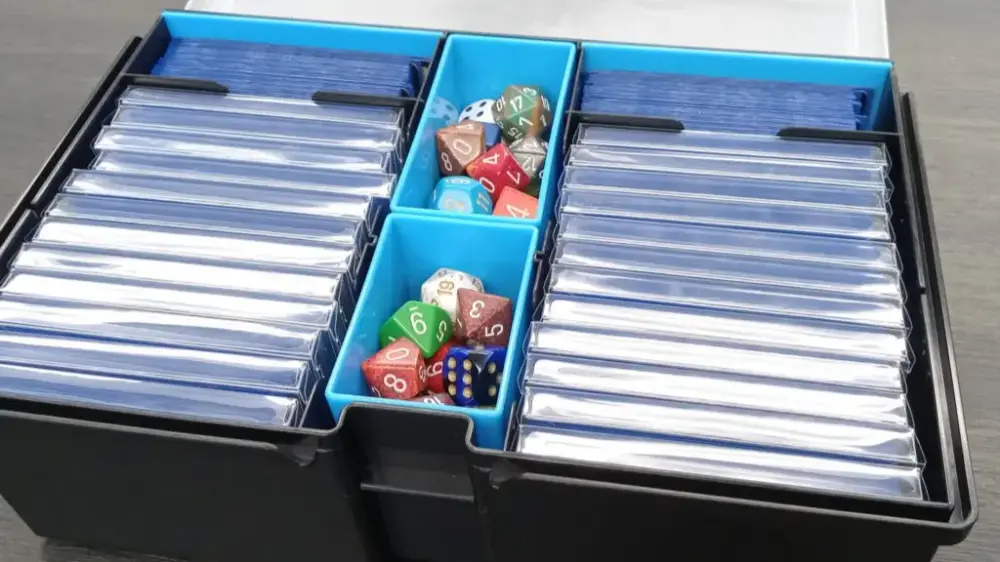
An MTG proxy binder is one of the easiest ways to stop reprinting the same staples every time a new deck idea grabs you by the brain. Commander players are especially good at this problem. You build one deck, then another, then a “slightly different” third deck that somehow wants the same mana rocks, the same utility lands, the same removal suite, and the same protection spells as the first two. Pretty soon your collection looks less like a system and more like a cardboard traffic jam.
A shared MTG proxy binder fixes that.
The idea is simple. Instead of treating every deck like a fully separate project, you keep one organized binder of reusable staples, lands, and role-players that can move between decks. Your deck boxes hold the commander, the theme pieces, the unique cards, and placeholders for the shared cards. Your binder holds the stuff you keep reusing.
It sounds a little obsessive the first time you hear it. Then you try it, and suddenly brewing gets cheaper, testing gets faster, and you stop paying for the same “obvious includes” over and over.
For a ready-made foundation, the Commander Staples Package for MTG is a strong place to start. The binder is basically that idea stretched across multiple decks and organized like you mean it.
What A Shared MTG Proxy Binder Actually Does
A shared binder is not just storage. It is a workflow.
It tells you which cards are truly universal in your decks. It gives you one place to grab the boring-but-important stuff. And it helps you separate “this card is a permanent staple for me” from “this card is a fun experiment that might get cut next week.”
That last part matters a lot.
When you print every new deck from scratch, you blur together three kinds of cards:
cards that belong in almost every deck you build
cards that belong in one color or archetype a lot
cards that are only for this exact brew
A shared MTG proxy binder keeps those categories honest. That makes it easier to spend your energy on the interesting part of deckbuilding, which is the identity of the deck, not whether you remembered to order another Arcane Signet.
Start With The Cards You Reuse The Most
The best first binder is boring. Good. Boring is exactly what you want.
Start with the cards that keep showing up. Not the flashiest cards. Not the pet cards. The ones you reach for constantly.
That usually means:
colorless mana rocks
universal utility lands
flexible spot removal
board wipes
basic protection pieces
a few widely reusable draw engines
common graveyard hate or utility slots
The reason is simple. Most Commander decks still want the same basic scaffolding even when the themes are wildly different. One deck might care about zombies, one about enchantments, and one about landfall, but they still all want to make land drops, ramp, draw cards, interact, and not die to the first sweeping effect.
That is why the “boring” pages of the binder save the most time.
Build The Binder In Modules
This is the part that makes the system actually work.
Instead of one giant random binder, build it in modules. When you do that, the binder becomes fast to use and easy to maintain.
Universal Colorless Module
This is page one territory. Sol Ring. Arcane Signet. Fellwar Stone. Mind Stone. Thought Vessel. Swiftfoot Boots. Lightning Greaves. Skullclamp. The One Ring, if that is your speed. These are the cards you are most likely to reuse constantly.
Land And Fixing Module
This is where the binder quietly earns its salary. Command Tower, Exotic Orchard, pain lands, shock lands, check lands, slow lands, bond lands, triomes, and your favorite utility lands all belong here. If you keep building in the same color combinations, these pages get used constantly.
Color Modules
Now split by color or color pair, whichever matches how you build. White gets efficient removal and protection. Blue gets countermagic and draw. Black gets tutors, removal, and recursion. Red gets impulse draw, sweepers, and burst mana. Green gets ramp, fight effects, and creature-based draw.
You are not building “best cards by color.” You are building the cards you personally reuse.
Archetype Modules
This is where the binder starts feeling smart. Keep a small section for themes you revisit over and over. Graveyard package. Tokens package. Artifact package. Enchantress package. Lands package. Spell-slinger package. Counters package.
The goal is not to fill these pages with every card that could fit. It is to keep the repeat offenders together.
Token And Support Module
A lot of people forget this and regret it later. Tokens, emblems, punch-outs, and common reminder pieces should have a home too. The deck might work fine without them in theory. In practice, the table gets messy fast.
For this part, MTG Tokens and Emblems: What to Include, What to Skip When Ordering is a good companion read, because token clutter is one of the easiest ways to make a clean binder system feel sloppy.
Organize For Retrieval, Not For Beauty
A binder that looks great and takes forever to use is not helping you.
You need to be able to pull cards quickly, return them quickly, and spot missing pieces quickly. That means the best organization method is the one you can keep up with, not the one that would impress an archivist.
I like organizing by role first, then by color or color pair. That keeps the cards you actually swap most often near each other. Some players prefer strict color sorting. That can work too, but role-based pages make more sense to me when I am building decks, because i think in jobs before i think in colors.
Try something like this:
Section 1: universal colorless
Section 2: lands and fixing
Section 3: white
Section 4: blue
Section 5: black
Section 6: red
Section 7: green
Section 8: multicolor modules
Section 9: archetype modules
Section 10: tokens and support
That is not sacred. It is just clean.
Use Placeholders Like A Responsible Goblin
This is the trick that makes the whole thing playable.
If a shared card is currently “owned” by the binder, the deck box needs a placeholder. Not a vague memory. Not a note in your phone you will forget exists. A real placeholder card in the slot.
A good placeholder should tell you:
the name of the missing card
the binder section or page
whether that card is currently checked out to another deck
You can do this with blank cards, checklist cards, paper slips in sleeves, or simple printed inserts. The point is clarity. When you grab a deck, you should know within ten seconds whether it is ready to shuffle or whether three staples are still living in another box.
This is also where a quick pregame audit helps. The MTG Commander Decklist Sanity Check fits perfectly here, because once you start moving shared cards around, it gets very easy to be accidentally at 98 cards and very confident about it.
Decide Which Cards Stay Shared And Which Earn Duplicates
Not every staple should live in the binder forever.
Some cards are so universal to your personal deckbuilding habits that they eventually deserve duplicates. The binder helps you figure out which ones those are. If the same card gets checked out every week, or if two favorite decks constantly fight over it, that is a signal. Print a second copy and free up the bottleneck.
This is one of the best things about using proxies with a shared system. You can start with one shared copy, see what cards truly matter across your decks, and only then decide what deserves permanent duplication.
That is a lot cleaner than printing four copies of a card just because it looked “staple-ish” on a Tuesday.
Keep A Master List Or You Will Drift Into Chaos
A binder system without a master list becomes folklore very quickly.
You do not need a spreadsheet empire, but you do need one source of truth. That can be a simple note, a deckbuilding app, a Google Sheet, or printed decklists stored with each deck. The main thing is that you can answer these questions fast:
which cards are in the binder
which deck expects each shared card
which cards are currently checked out
which staples deserve duplicates soon
This sounds like extra work. It is, a little. But it is much less work than rebuilding the same packages over and over, or realizing half your decks were only “finished” in your imagination.
The Biggest Mistakes To Avoid
The first mistake is making the binder too big. If everything is a staple, nothing is a staple. Keep the shared pool tight.
The second mistake is organizing by vibes. “I kind of know where stuff is” works until you are late for game night and cannot find your second copy of a land you absolutely thought was in the blue section for some reason.
The third mistake is forgetting support pieces. Tokens, emblems, punch-outs, and reminder cards deserve real space in the system.
The fourth mistake is never promoting cards out of the binder. Some cards should become permanent duplicates once you know they matter to several decks. A shared system is supposed to show you those patterns, not trap you in one-copy purgatory forever.
Conclusion
A shared MTG proxy binder is not just a neat storage project. It is a better way to build multiple decks without re-solving the same problems every time. Start with universal staples. Add land and color modules. Keep archetype packages small and honest. Use placeholders that actually tell you where things are. Then let real deck use tell you which cards deserve duplicates.
That is the whole system. Less reprinting. Less clutter. Faster brewing. Fewer games where you discover a “finished” deck is missing three cards and a token you definitely meant to order.
The staple binder idea has been around in Commander circles for years, and the core concept is still the same now: identify the overlaps, keep those cards in one shared place, and use placeholders or play-test stand-ins so multiple decks can share one reusable pool.